

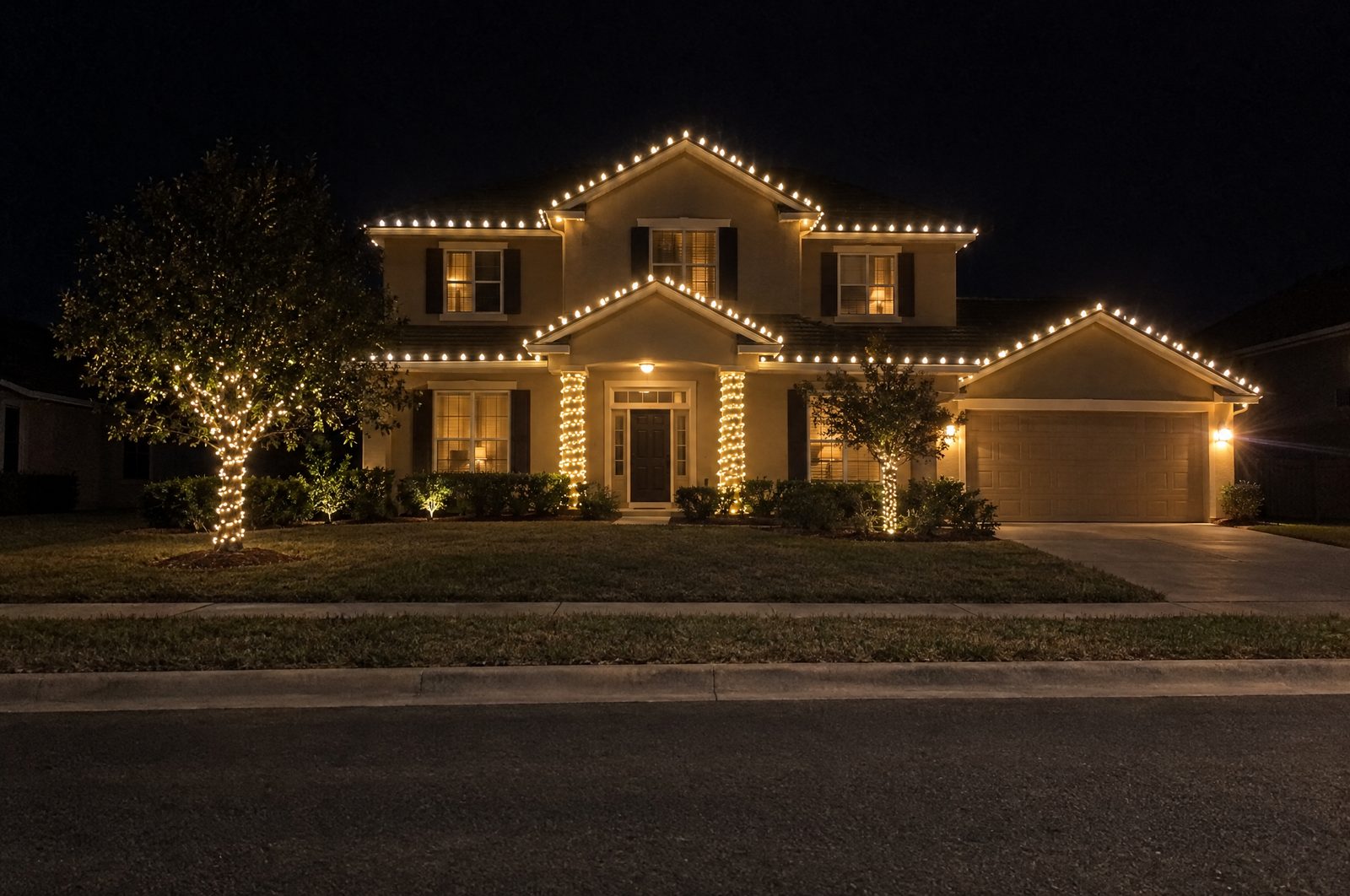
In the warm white vs cool white Christmas lights debate, warm white is the softer, candle-looking option that flatters stucco, tan brick and tile. Cool white is crisp and bright, and it pops against white trim, gray paint and coastal homes. Warm white is our default and most popular color. The bigger rule is matching: one product line across roof, trees and walkways.
What is the actual difference between warm white and cool white?
Warm white leans yellow, close to an old incandescent bulb or candlelight. Cool white leans blue-white, closer to daylight. Both are LED, both draw little power, and both come in the C9 bulbs we run along rooflines and ridges.
How each one reads at night
Warm white makes a house look cozy and traditional. The light sinks into the color of the house instead of fighting it. Cool white makes a house look sharp and modern, and it reads brighter from the street even at the same bulb count.
Neither is better. They are two different moods, and the house usually picks for you.
If a household is split, it helps to look at the front door light and the landscape lighting already on the house. Matching that color temperature keeps the whole front yard looking like one plan instead of two.
How does each color read on stucco, brick and tile?
The surface behind the bulbs matters as much as the bulbs. Stucco and tile are everywhere in Central Florida, and they bounce light back at you.
Quick read by material
- Tan or cream stucco: warm white blends with it and looks rich. Cool white can make warm stucco look a little washed out.
- White or gray stucco: both work. Cool white keeps the crisp look the paint is going for.
- Red or orange brick: warm white sits naturally with the brick tone. Cool white creates a hard contrast, which some people want.
- Barrel tile roofs: warm white softens the terracotta. Cool white makes the tile edges stand out more.
The roof material also changes how we attach the lights. On tile, clips slide up under the tile where they fit, and tile ridgelines are often held with a removable adhesive that comes off at takedown. No screws, no staples, no drilling. More on surfaces in our guide to Christmas lights on stucco, tile and metal roofs.
Why is warm white the default on most houses?
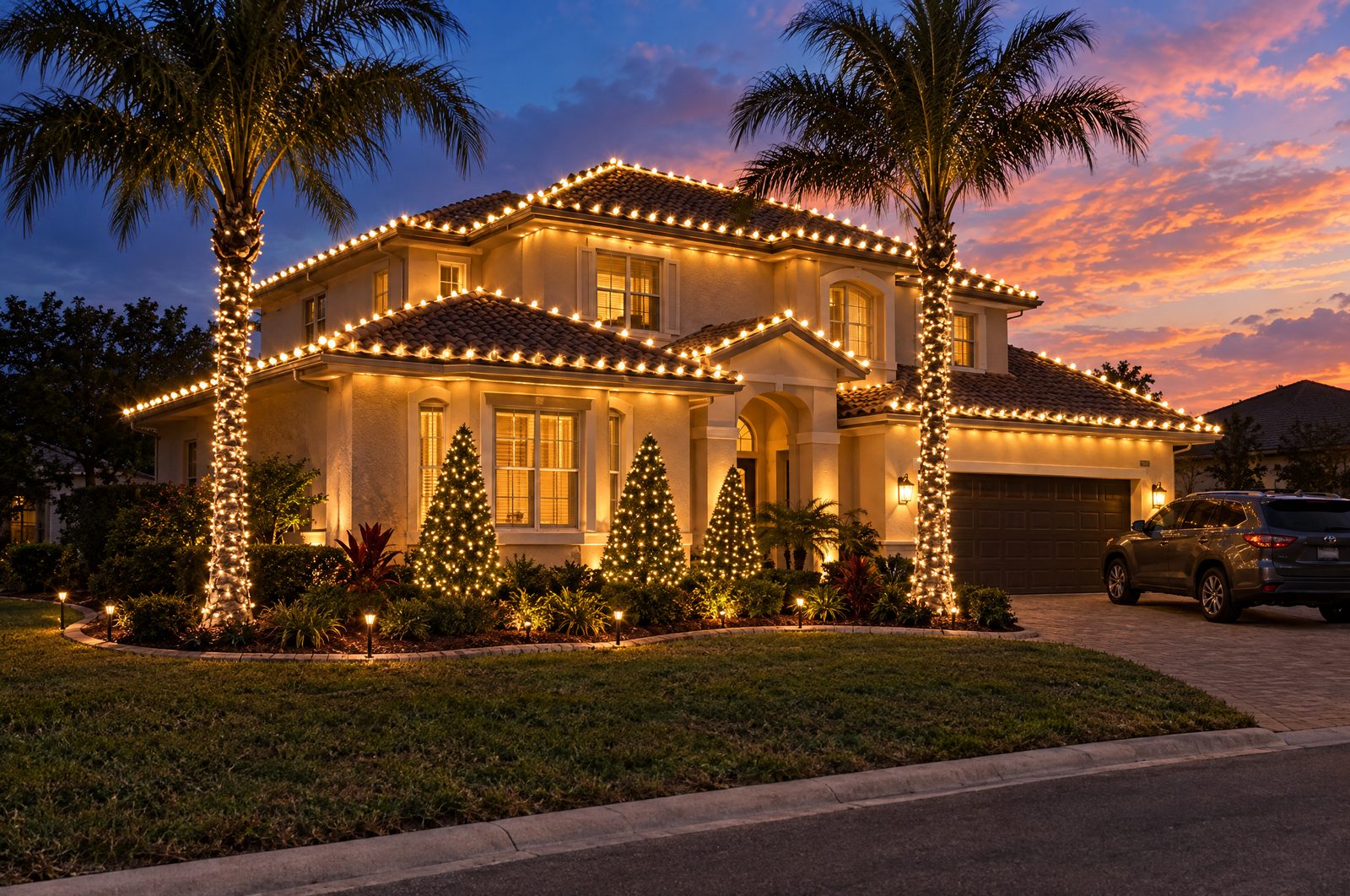
Warm white is our default and the most popular color we install. It suits the stucco and tile homes we work on, and it photographs well.
Where cool white wins
Cool white has a clean, icy look that fits coastal and modern homes, white trim and gray siding. Paired with blue, it reads like a winter display instead of a traditional one.
Both come in the same commercial-grade C9 bulbs, so the choice costs the same. It is purely a look decision, not a price decision. You can see how both sit on homes we light in Ormond Beach and around Deltona.
- Crisp, bright, modern read
- Pops against white trim and gray paint
- Pairs naturally with blue
- Strong from a distance
- Softer, candle-like glow
- Flatters stucco, tan brick and tile
- Our default and most popular color
- Mixes easily with red for a classic look
Can you mix warm white with red or multicolor?
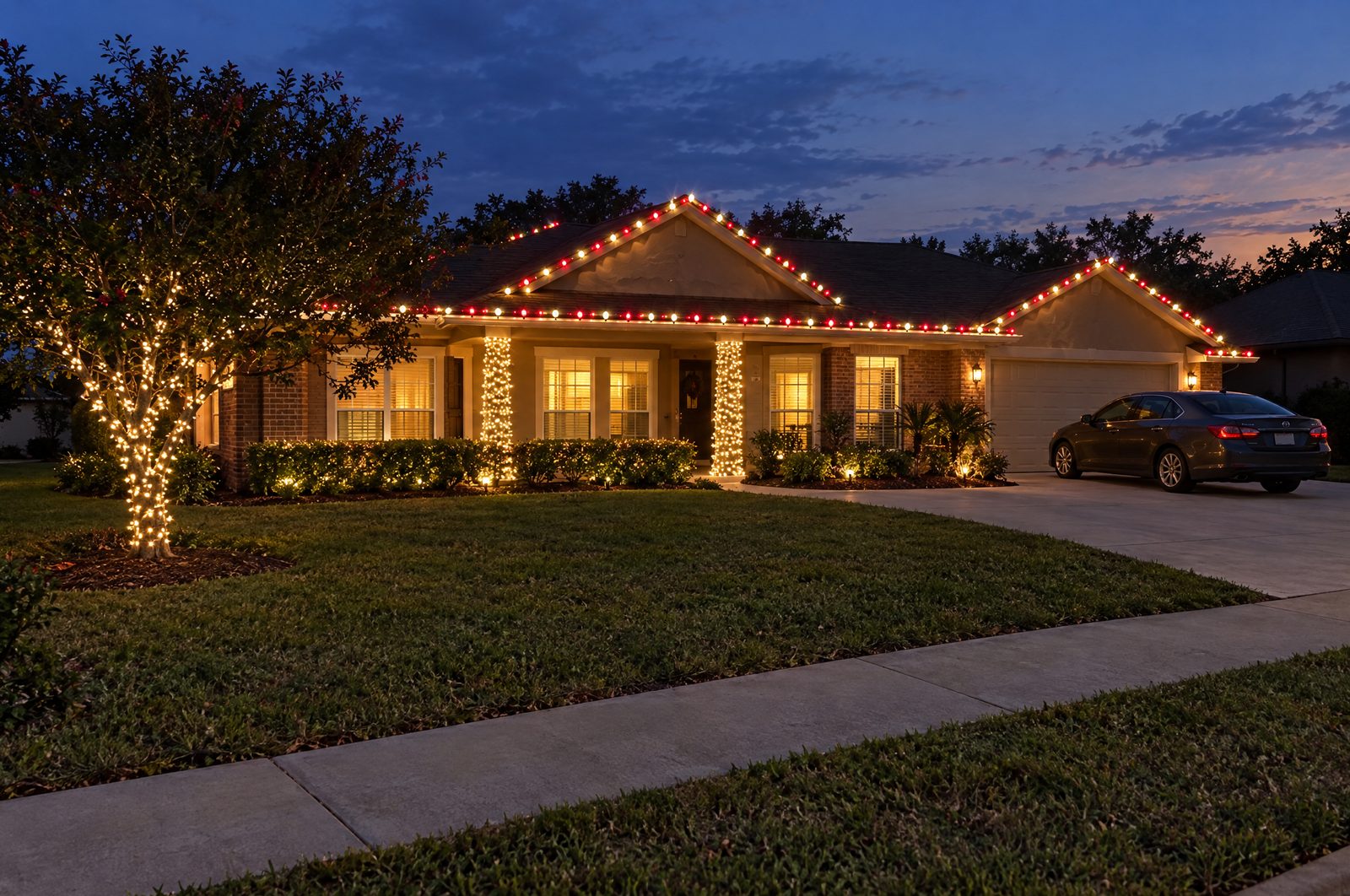
Yes, and alternating red and warm white is one of the patterns people ask us about. C9 bulbs come in any color or pattern, so building it along a roofline is simple.
What mixes well
Warm white sits well with red, and the two read as classic Christmas. Cool white sits well with blue, and the pair reads cold and clean. Mixing warm white with blue tends to muddy both.
Full multicolor is its own look. It does not need white at all, and we can run multicolor C9 bulbs on the roof with multicolor mini lights in the yard trees so the whole property matches.
One thing we skip either way: icicle lights on rooflines. Nobody makes a commercial-grade icicle light that lasts, so rooflines and ridges get classic C9 bulbs only. When we say icicle drops, we mean drop lights hung from tree branches.
Not sure which white suits your house?
Text us a few photos of the front and we will draw a mockup in your color choice, then send a same-day quote by text.
Get A Fast QuoteOr call/text 386-215-5461Why does one product line keep the whole house matched?
Because whites are not interchangeable. Two strands sold as warm white from different lines can read noticeably different side by side, and once they are on the same roof you see it every night.
How we keep it consistent
We supply all the lights, so every element on the property comes from the same stock. Roofline C9 bulbs, 70-light LED mini strands with 4-inch spacing on tree trunks and canopies, stake lights on walkway and driveway edges at roughly one stake per foot: all matched.
Because it is a rental, the lights stay ours. At takedown they come off with color-coded tags and go into labeled bins at our facility, so the same matched set goes back up on the same house next season. That is also why we do not install lights a customer already bought, including app-controlled or permanent systems. More on that in do installers provide the lights and in our guide to removal and storage.
A small thing that saves hassle: if you add your own decorations, it helps to plug them into a separate outlet and leave our timers exactly as programmed. If anything looks off, a quick call or text and we will take a look.
How do we help you pick a color before install day?
The color gets decided before anything is cut, during the design step. Nothing goes up until you have said yes to the scope and the color.
Everything we quote starts from photos, so you never need to be home for a visit. We do not do in-person quote visits during install season. Full detail is in our guide on how to get a Christmas light quote.
- 1Send photos of the front
Two to four clear photos of the front of the house, plus any trees or columns you want lit. We can also work from Google Maps and Street View.
- 2We measure the roofline
We measure linear feet on the satellite view and ask for a rough budget so we can size the design before drawing anything.
- 3We draw a mockup
We draw the design on a photo of your house so you can see the color and the layout before you commit.
- 4You confirm color and scope
Once you approve the mockup, we build the quote. A 50% deposit locks the install date.
- 5We cut to fit
Lights are custom cut to the house, then tagged and binned so the same matched display goes back up next year.
What is the best color Christmas lights for a house like yours?
There is no universal answer, but a short gut-check gets most people there fast. Run through the list below and the house will usually tell you.
If you want a second opinion, we will say what we would do on your home when we send the mockup. We serve homes from Daytona Beach to Winter Park, so we see every material and paint color. Most jobs are front-facing only, with sides and back optional, so the color choice usually comes down to the one face of the house everybody sees from the street.
- Warm paint, tan stucco, terracotta tile: warm white reads best
- White trim, gray paint, coastal look: cool white holds up
- Want classic Christmas: warm white, or alternating red and warm white
- Want a winter or icy look: cool white, or cool white with blue
- Kids voting for color: multicolor C9 on the roof, multicolor minis in the trees
- Existing landscape lighting: match its color temperature
- Still unsure: warm white is our default for a reason
Does the color choice change the price?
No. Warm white, cool white, red and white, or full multicolor all cost the same, because it is the same commercial-grade C9 bulb in a different color. Price follows size and scope, not color.
| Display | Typical season price |
|---|---|
| Minimum for any display | $1,000 |
| Most single-story rooflines | $1,000 - $2,000 |
| Two-story homes | $1,500 - $2,500 |
| Large custom full-property | $4,500 and up |
Rough guide: roofline about $7 per foot, ridgelines about $10 per foot, lights included. Homes with leaf-filter style gutter guards cost more, because the guards have to come off and go back on around the lights. Full breakdown on our pricing page, and the seasonal rental covers design, install, free in-season fixes, January takedown and storage.
When should you lock in your color and your date?
September or October is the best time. Returning customers book first, and by mid-November we are usually booked into mid-December.
Early bookers get a 15% early-booking discount for the 2026 season. It does not stack on a job already at the $1,000 minimum. A 50% non-refundable deposit holds the date, and the balance is charged the day of install, so nothing is due at takedown.
The quote form takes about 60 seconds and we reply with a same-day quote by text. More on timing in our guide to when to book in Florida, and you can see where we work on our service areas page.
Frequently Asked Questions
Neither is better, they are different looks. Warm white is softer and leans yellow, which suits tan stucco, red brick and terracotta tile. Cool white is crisp and blue-white, which suits white trim, gray paint and modern or coastal homes. Warm white is our default and the most popular color we install.
We do not recommend it on one roofline. The two whites sit right next to each other and the difference becomes obvious, which makes the display look like two jobs instead of one. If you want contrast, warm white with red or cool white with blue both work well, and C9 bulbs come in any color or pattern.
No. Color does not change the price, because it is the same commercial-grade C9 bulb in a different color. Price follows the size of the display: every display starts at $1,000, most single-story rooflines run $1,000 to $2,000, and two-story homes run $1,500 to $2,500, lights included.
Warm white usually looks best on tan or cream stucco, because the light blends with the wall color instead of washing it out. On white or gray stucco, cool white holds up well and keeps the clean look the paint is going for. We will give you our opinion on your specific house when we send the design mockup.
Yes. We supply all the lights, so everything comes from the same stock: C9 LED bulbs on the roofline and ridges, 70-light LED mini strands wrapping tree trunks and canopies, and stake lights along walkways and driveways. That is how the whole property stays matched instead of showing two slightly different whites.
Get Your Christmas Light Quote
Answer a few quick questions. Our team texts you a same-day quote.
Get A Fast QuoteOr call/text 386-215-5461