
"Christmas lights" covers a lot of ground — literally, from the peak of your roof down to the walkway. Here's what each option actually is, what it does for your home, and how people combine them.
Roofline (C9 bulbs along the gutter and fascia, about $7 a foot) is the layer every display starts with. Ridgeline (the roof peaks, about $10 a foot) gives the full silhouette. Tree wrapping, pathway stakes, icicle drops from branches and shrubs finish the yard. Every home starts at $1,000, lights included, and the mockup shows you every layer before you decide.
First, the one thing they all share
Every light we install is commercial-grade LED. That matters for three reasons: LEDs are far brighter and more even than retail strands, they use a fraction of the electricity, and they hold up to Florida weather. And because you rent the display rather than buy it, you never have to think about replacing a strand — if a bulb goes out mid-season, we fix it for free.
1. Roofline
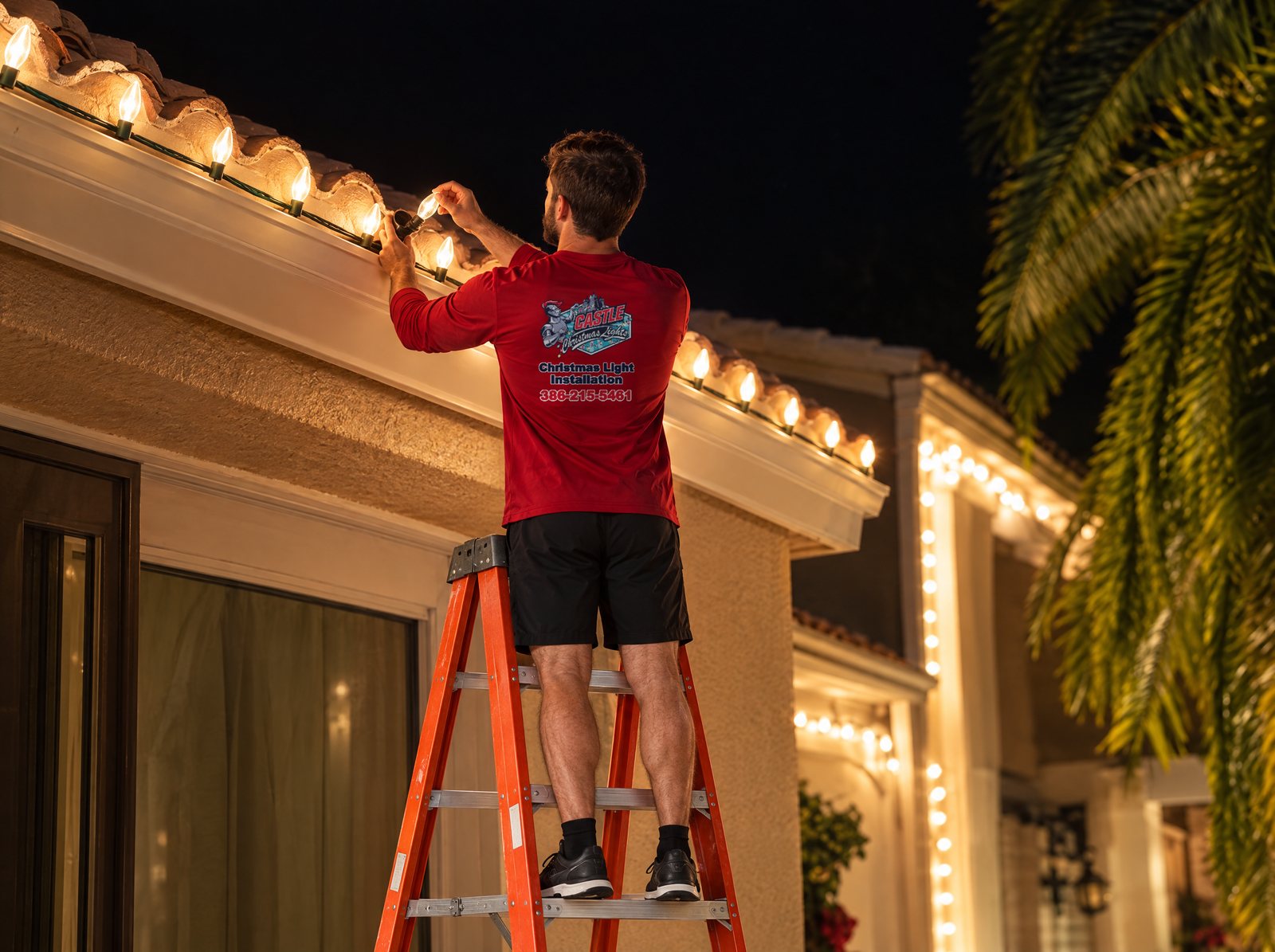
What it is: lights along the gutter and fascia — the edge of the roof you see from the street.
What it does: this is the classic Christmas-house outline, and it's the base of almost every display we install. Even on its own, a clean roofline instantly reads as "professionally done" because the spacing is even and the lines are straight.
Best for: everyone. If you only do one thing, do this. Roofline-only displays start at $1,000 for a single-story home and $1,500 for a two-story.
2. Ridgeline
What it is: lights along the peaks of the roof itself, above the gutter line.
What it does: adds the full silhouette. From the street, roofline alone outlines the bottom of the house; roofline plus ridgeline outlines the whole shape. It's the difference between a frame and a full drawing.
Best for: homes with interesting rooflines — gables, hips, multiple peaks — and anyone who wants the display visible from a distance.
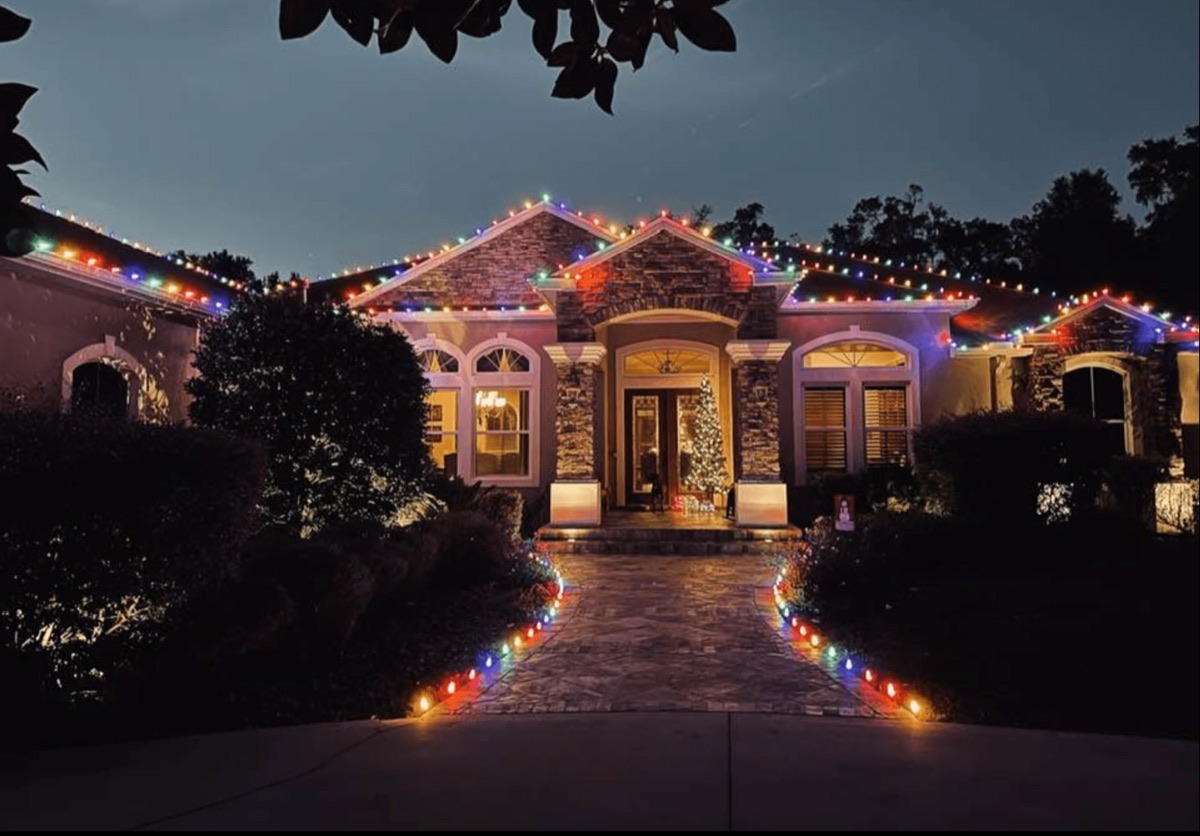
Warm white on the roofline is our default and most popular color. If you want color, put it in the trees, not on the roofline: a red-and-warm-white palm reads as festive from the street, a multicolor roofline reads as busy.
3. Pathway lighting
What it is: lights along walkways and driveway edges.
What it does: pulls the display down to ground level and guides the eye (and your guests) to the front door. It also makes the yard feel finished instead of leaving all the light up on the roof.
Best for: homes with a long walkway or a driveway that faces the street.
4. Icicle drops in trees
What it is: cascading icicle-style lights hung from tree branches.
What it does: creates a soft, glowing canopy effect — the "winter wonderland" look, in a state where the only ice is in your tea. It's especially striking on large oaks and over driveways.
Best for: mature trees with spreading branches near the front of the house.
5. Tree wrapping
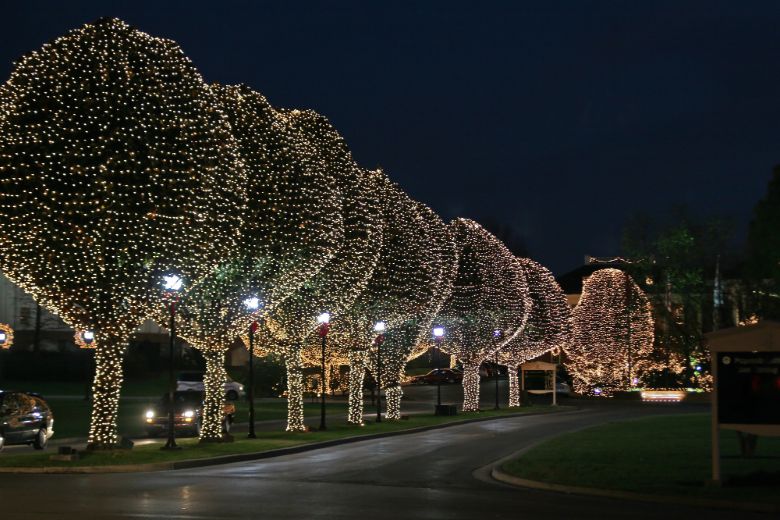
What it is: trunks and limbs wrapped tightly in mini lights.
What it does: turns a tree into a sculpture. Wrapped palms in particular are a Florida signature — the trunk glows and the fronds catch the light. A pair of wrapped trees flanking the entry is one of the highest-impact upgrades per dollar.
Best for: palms, crape myrtles and any tree with a clean trunk you can see from the street.
A small palm trunk takes about 2 strands of our 70-light minis, a large palm 4 to 5, and an oak wrapped to 20 feet takes 7 or 8. That is why two wrapped palms flanking the entry is the best-looking add-on per dollar on most homes.
6. Shrubs
What it is: lights over hedges and landscaping beds.
What it does: fills in the space between the house and the yard so there are no dark gaps in the display. Shrubs are the finishing touch that makes the whole front of the house glow instead of just the edges.
Best for: homes with foundation plantings or hedges along the front.
Think of it as layers: roofline is the base, ridgeline completes the shape, trees and shrubs fill the yard, and pathway lighting ties it to the ground. Each add-on is priced on top of the roofline — see what Christmas light installation costs in Central Florida.
Three combinations that always look great
- The Classic: roofline + shrubs. Clean, timeless, and the most popular single-story package.
- The Silhouette: roofline + ridgeline + pathway. The whole house outlined, top to bottom, visible from the end of the street.
- The Showstopper: roofline + ridgeline + wrapped palms + icicle drops + shrubs + pathway. Everything lit — the house people slow down for.
Not sure which layers fit your home? Our quote form asks for exactly this, and our team will suggest what works for your roof and yard before you commit to anything. Every quote includes a custom design mockup showing where the lights will go.
Every city we serve gets the same package and pricing — see Christmas light installers in Port Orange, Lake Mary and Orlando, or the full service area. Learn what every residential installation includes.
Pick Your Layers, Get A Same-Day Quote
Choose roofline, ridgeline, trees, pathways or all of the above. We'll design it and text you a price today.
Get A Fast Quote Or call/text 386-215-5461